| Game Menu |
|
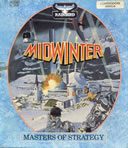
Midwinter is a deep and compelling strategy game, original in concept and revolutionary in design. A new ice age grips the world and along with fellow pioneers you live on the Midwinter Isle, the last habitable oasis on earth. A very real threat looms large as invaders attempt to seize your sanctuary. Controlling up to 32 characters, you must defend an immense playing area of over 160,000 square miles. You can ski, hang-glide, snow-buggy or travel by cable car across stunning glacial landscape, shooting, sniping and sabotaging the intruders. Midwinter will keep you locked in the ice age for a long, long time!
Rating: Not rated yet Times Played: 926 Released: 1990 |
|
Personal Best: N/A
|

|
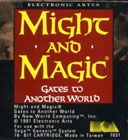
The game is set on the world of VARN (Vehicular Astropod Research Nacelle) which features expansive outdoor terrain, castles, caves, underground cities and an Astral Plane.
The game centers on six adventurers who are trying to discover the secret of the Inner Sanctum: a kind of "holy grail" quest. While trying to discover the Inner Sanctum, the heroes discover information about Corak's hunt for the missing villain Sheltem. They end up unmasking Sheltem, who had been masquerading as the King, and defeating his evil machinations. At the end of the game they go through the "Gates to Another World" and travel to CRON, not knowing that Sheltem has also escaped to that world.
Although VARN is populated mostly by medieval fantasy tropes such as knights in armor, mythical monsters and magicians, a number of science fiction elements enter the setting. As an example, the Sheltem plot is first introduced when the adventurers visit the site of a crashed space ship and are told by aliens that their prisoner is at large in the world.
Times Played: 1635 Released: 1990
Series: might and magic
|
|
Personal Best: N/A
|
|
One of a series of Bard's Tale style RPGs developed during the days of the almighty Amiga and ported to the Genesis.
Popular dungeon crawlers that I remember well from the time. Old, but still kinda fun. The music kinda grates on the ears, though.
Rating: Not rated yet Times Played: 2095 Released: 1991 |
|
Personal Best: N/A
|
|
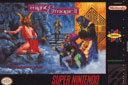
Might and Magic II: Gates to Another World is a role-playing video game,developed by Starcraft and published by Logic, which was released in Europe in 1993. It is the sequel to the game Might and Magic: The Secret of the Inner Sanctum.
As with Might and Magic 1, the player used up to six player-generated characters at a time, and a total of twenty-six characters could be created, who thereafter stayed at the various inns across CRON. To continue game continuity it was possible to "import" the characters developed from the first game. Additionally, Might and Magic 2 became the first game in the series to utilize "hirelings", predefined characters which could extend the party to eight active characters. Hirelings were controlled like regular characters but required payment each day; pay increased with level.
Other new features include two new character classes, an increased number of spells, the introduction of class "upgrade" quests and more than twice the number of mini-quests. Also added was "secondary skills" such as mountaineering (necessary for travelling mountainous regions) and linguist (raising the character's intelligence, and necessary for reading certain messages). Each character could have up to two secondary skills.
Times Played: 2303 Released: 1993
Series: might and magic
|
|
Personal Best: N/A
|
|
One of a series of Bard's Tale style RPGs developed during the days of the almighty Amiga and ported to the Genesis.
Popular dungeon crawlers that I remember well from the time. Old, but still kinda fun. The music kinda grates on the ears, though.
Rating: Not rated yet Times Played: 1586 Released: 1993 |
|
Personal Best: N/A
|
|
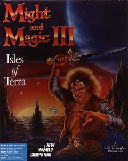
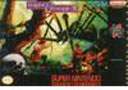
Might and Magic III: Isles of Terra is the third game in the role-playing video game series Might and Magic. Released in 1991, it is the predecessor to Might and Magic IV: Clouds of Xeen and the sequel to Might and Magic II: Gates to Another World.
Might and Magic III employs an updated first person perspective interface based on the one employed by Might and Magic: The Secret of the Inner Sanctum and Might and Magic II: Gates to Another World. The action is turn based throughout the game phases. A number of improvements, made possible by an expanded development team and advancements in computer technology, are incorporated. The graphics are more colourful, taking advantage of contemporary VGA displays. A number of sound cards are supported, offering improved sound effects, background music, and synthesized speech. Mouse interaction is also supported for the first time.
PLOT
After the defeat of Sheltem and his forces on CRON in Might and Magic II: Gates to Another World, a new party of adventurers from Sheltem's "homeworld" of Terra find themselves embroiled in the battle between the two Guardians. The adventurers must aid the mysterious Corak in attempting to stop Sheltem once again and putting an end to his evil machinations. In canon, these adventurers are named Sir Caneghem, Crag Hack, Maximus, Resurrectra, Dark Shade, Kastore, Robert the Wise and Tolberti.
Throughout the game, the adventurers travel the Isles of Terra, a grouping of separate, flat "nacelle" worlds drawn from the Void onto the oceanic planet of Terra by Sheltem himself in previous years. Driven against the Ancients, Sheltem is now launching their nacelles into the suns of various worlds, snuffing out countless lives in his wake. Driven by the tales told in Corak's journals regarding the Ancients, the Elemental Lords and the "Forces of the Dome", the heroes pursue the Guardians, battling terrors along the way.
Times Played: 2633 Released: 1994
Series: might and magic
|
|
Personal Best: N/A
|

|
Millipede is the sequel to Centipede, and features similar gameplay but with a new swarm of insects after your bug zapper! Your goal is to destroy the multi-segmented millipede as it traverses its way through the mushroom forest towards the bottom of the screen. When all millipede segments have been destroyed, you move on to the next, more difficult level. In addition to the millipede, you will also encounter spiders, beetles, mosquitos, inchworms, bees, dragonflies, and earwigs. To help you out, dynamite will occasionally appear scattered throughout the mushroom forest which will explode if shot by your bug zapper. With a well timed shot, numerous millipede segments (and other insects as well) can be taken out as they pass by.
Rating: Not rated yet Times Played: 3552 Released: 1987 |
Permafrostrick
419,333
|
Personal Best: N/A
|

|
Millipede is a 1- or 2-player game with a color raster-scan video display. The game action takes place on a playfield filled with mushrooms, flowers, and deadly DDT bombs. The player tries to destroy a variety of insects that drop from the top of the screen or enter from the sides of the screen, most of them to attack the player. The player controls a bow-shaped vehicle called the Archer. The object of the game is to shoot and destroy as many objects as possible for a high point score, before the player's lives are all used up.
Player control consists of a Midi Trak-Ball control and a FIRE button. The Archer is moved by rotating the Midi Trak-Ball control. The Archer can be moved in all directions, but only within the bottom fifth of the screen. However, the Archer must move around mushrooms, flowers, and DDT bombs, since these are fixed and not 'transparent' objects. Pressing the FIRE button causes the Archer to emit an arrow that travels upward. The Archer may fire one or many arrows (by holding down the FIRE button constantly). But only one arrow will appear on the screen at a time.
A player may start a game at an advanced level of play and receive bonus points for starting play at that level.
Game play begins with a playfield of randomly placed mushrooms and DDT bombs. A Millipede enters at the top center of the screen and starts snaking its way across the screen. The Millipede changes direction when it runs into a fixed object in the playfield (mushroom, DDT bomb, or flower), or when it reaches the side boundaries of the playfield.
When a segment of the Millipede is shot, it is destroyed and a mushroom appears where that segment was shot. When shot, the Millipede breaks into two smaller Millipedes, each with its own head. When a Millipede reaches the bottom of the screen, it starts back up, but remains within the area of the Archer (the bottom 5th of the screen).
If a Millipede reaches the bottom of the screen without being shot, it releases its tail. This tail changes into a new head. Also to provide the player a challenge, if a Millipede is still alive when it reaches the bottom, new heads will enter the screen almost at the bottom of the sides. More of these heads will appear as time progresses.
An attack wave is complete when all Millipede segments are destroyed. The screen then scrolls down one line. At the 9th attack wave, when the Millipede with only four segments enters from the top of the screen, the screen will scroll down every two seconds. The only way a player can stop the scrolling screen is to shoot a DDT bomb or destroy the entire Millipede.
It takes four shots to destroy a mushroom. After the fourth attack wave of each wave cycle, the entire playfield of mushrooms changes. Some mushrooms die and new mushrooms grow where there were none before. A mushroom next to a DDT bomb becomes poisoned (See Tips and Tricks below for complete details).
When a Millipede runs into a poisoned mushroom, two things happen: its head changes color, and it changes direction and falls vertically to the bottom of the screen.
DDT bombs explode when hit by an arrow. Any object near the bomb is engulfed by the explosion. Insects are worth three times their normal point value if they are destroyed by the explosion.
Spiders appear in any round. They move in a random pattern on the bottom third of the screen. As the player's score increases, the range of the Spider decreases, until it is confined to the bottom fifth of the screen. Also, more Spiders enter as the game progresses. A Spider destroys any mushroom or flower it moves over. Depending on a special option switch setting, the Spider moves slowly until a player reaches a specific score, and then it speeds up. If the Archer and a Spider collide, both are destroyed.
When a Millipede with fewer than eleven segments appears, an Earwig enters the screen from either side, moving at a relatively slow speed. As the player earns more points, the Earwig's speed increases. If an Earwig passes over a mushroom, it poisons the mushroom.
When a Millipede with fewer than ten segments appears, a Dragonfly enters at the top of the screen. The Dragonfly moves in a zig-zag pattern and its speed increases as the player's score increases. As the Dragonfly moves, it leaves a trail of mushrooms behind.
When a Millipede with fewer than nine segments appears, a Mosquito enters at the top of the screen and flies in a diagonal pattern. The Mosquito's speed increases as the player's score increases. When a Mosquito is destroyed, the screen scrolls up one row.
Beetles appear randomly after the first wave. They enter from the sides of the screen near the bottom, travel down to the bottom of the screen, and walk at least half way across the bottom. Then the Beetle travels up and exits at the side of the screen. If a Beetle passes over a mushroom, the mushroom changes into a flower. Flowers cannot be destroyed by the Archer's arrows. Depending on a dip switch setting, the number of Beetles appearing on the screen and the speed of the beetles increase as the player's score increases. When a Beetle is destroyed, the screen scrolls down one row.
Bees may fall from the top of the screen during any round. As the Bee falls, it leaves a trail of mushrooms behind. The Archer must hit a Bee twice to destroy it; the first shot just speeds it up.
An Inchworm may appear when a Millipede with fewer that eleven segments appears. The Inchworm travels from one side of the screen to the other side. It moves slowly until the player's score reaches 80000 points. Then it speeds up. If the Archer destroys the Inchworm, all insects will slow down for about three and one-half seconds.
After a Millipede of one, three, five, seven, or eleven segments has been destroyed, an insect bombing raid occurs. A raid may have only Bees, Dragonflies, Mosquitoes, or a mixture of all three.
Times Played: 7518 Released: 1982
Series: Centipede
|
doron
237,130
|
Personal Best: N/A
|

|
Creepy, crawly bugs - jumping spiders, buzzing bees, bouncing beetles, mosquitoes, dragonflies, inchworms and earwigs - have invaded your little garden patch. And you've got to blast fast to get rid of them! But watch out! The millipedes - cousins to the famed CENTIPEDE - are the most insidious insects of all! And if you're not careful, you might be caught in a swarm of bees, mosquitoes, or dragonflies. Fast action graphics and real bug sounds make this game just like the arcade smash hit!
Rating: Not rated yet Times Played: 2363 Released: 1984 |
|
Personal Best: N/A
|

|
Millipede is a Shoot-'Em-Up game, published by Atari, which was cancelled before it was released.
Times Played: 2457 Released: 1984
Series: Centipede
|
richard_Stewart
266,558
|
Personal Best: N/A
|

|
Arcade Classic No. 2: Centipede / Millipede is an Action game, developed by The Code Monkeys and published by Nintendo, which was released in 1995.
Rating: Not rated yet Times Played: 2259 Released: 1992 |
Permafrostrick
494,904
|
Personal Best: N/A
|
|
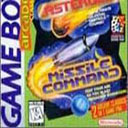
Missile Command is an Action game, developed by The Code Monkeys and published by Accolade, which was released in 1992.
Rating: Not rated yet Times Played: 2442 Released: 1991 |
FudgyDRS
118,345
|
Personal Best: N/A
|

|
Missile Command is a 1- or 2-player game with a color monitor. The game depicts an Armageddon-style war in which players defend their missile bases and cities with antiballistic missiles (ABMs). The enemy - the game computer - launches incoming waves of attack missiles. These weapons may be either individual missiles or multiple independently-targed re-entry vehicles (MIRV), which unleash branching attack missiles. In addition, the enemy occasionally launches missiles from a fast-moving 'killer' satellite or from bombers. The enemy also launches smart bombs that usually avoid explosions.
Players receive varying numbers of points for intercepting attack missiles, for having unused ABMs still in their bases' arsenals, and for having their cities undamaged after a missile wave.
The game begins when either Start pushbutton is pressed. The game ends when the player's last city is destroyed.
The three bases - Alpha, Delta and Omega - each have ten ABMs ready to be fired. Players must be careful to fire the ABMs more or less evenly from among those bases, because no more ABMs are granted until the screen resets in preparation for a new wave of attack missiles. If an enemy missile strikes a city or base, the colorful buildings or base will change to the solid color of the landscape.
The game continues until all cities are destroyed. Missile Command has no operator-selectable fixed time length. Thus a highly skilled player can play longer than the novice.
During the second wave, a 'killer' satellite and/or bomber will appear on the screen, moving quickly and launching attack missiles at the bases and cities. Players get bonus points for shooting down the satellites or bombers.
The general approach for getting high point scores is fairly quickly discovered : try to launch your ABMs when the enemy missiles have just appeared at the top of the screen. Then they are clustered together, where one ABM can usually destroy several enemy missiles. In the later, more advanced waves, players can lay out a blanket of explosions.
You start the game with a certain number of cities depending on the 'Cities' dip switch (4, 5, 6, or 7 cities; the default is 6), and can have no more than 6 cities in play at one time. If the dip switch is set to starting with 7 cities, the 7th city will be treated as a bonus city after at least one city in play has been destroyed.
You earn a bonus city every time you score a certain number of points ('Bonus City' dip switch, the default is 10000). You don't see your bonus cities until they replace destroyed cities at the beginning of the next wave.
- CAST OF ELEMENTS -
Targeting crosshair : Aim your missiles quickly but carefully. Use the trackball to move the targeting crosshair to where you want the next missile to go, then press any Launch Control button to fire the missile. The missile will explode where the crosshair was positioned when the Launch Control button was pressed.
Cities : There are six cities in total on the screen at one time, three on either side of the Delta Base. If one enemy missile or smart bomb manages to strike a city, that city will be wiped out. When all cities are destroyed, the game is over.
Alpha Base : The missile base on the left side of the screen. Press the leftmost Launch Control button to launch an ABM from the Alpha base.
Delta Base : The missile base in the center of the screen. Press the middle Launch Control button to launch an ABM from the Delta base.
Omega Base : The missile base on the right side of the screen. Press the rightmost Launch Control button to launch an ABM from the Omega base.
NOTE: The Alpha and Omega bases launch ABMs at a slower speed than the Delta base, so you must plan further ahead when launching missiles from those bases.
Defensive missiles : The ABMs you launch to protect your cities. Each missile base contains 10 ABMs per wave. If any missile base is struck by an attack missile or smart bomb, the remaining stock of missiles for that wave are destroyed, and the missile base is rendered useless until the next wave. You receive bonus points for every ABM you have remaining at the end of each wave.
Attack Missiles : Their only aim is to destroy your cities and missile bases. Every missile wave starts off with a hailstorm of attack missiles. They never deviate from their path. They may, however, turn into MIRVs.
MIRV : Surprise! There is no warning when an attack missile turns into an MIRV (with multiple warheads). Think fast. Each new missile that the MIRV unleashes is carefully targeted.
Killer Satellite : A mean-looking satellite that travels across the sky at a mid-level altitude and fires attack missiles. First appears in Wave 2.
Bomber : A big slow-moving target that flies across the sky at a mid-level altitude, but watch out! It fires attack missiles. First appears in Wave 2.
WARNING: If you destory a bomber or killer satellite before they deploy their missiles, you may see their missiles added to the downpour. An existing missile may also turn into an MIRV.
Smart Bomb : Smart enough to avoid most explosion clouds from your ABMs. Your ABM must explode next to one in order to destroy it. You can also squeen it between two explosions to destroy it. First appears in Wave 5.
'LOW' Warning : As soon as there are only three ABMs left in a missile base, the game displays the word 'LOW' underneath that base, and a warning signal sounds. Heed the warning.
Times Played: 4057 Released: 1980
Series: Missile Command
|
GraceUnderPressure
2,933,460
|
Personal Best: N/A
|
|
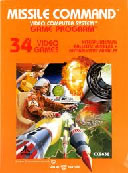
RED ALERT! The enemy is attacking the Six Cities with wave after wave of IPBM's, nuclear bombers, "killer" satellites, and smart bombs. Launch your Antiballistic Missiles, Commander, and knock out the enemy's warheads before they knock out your cities. But watch out! Your missiles are limited. If you run out of ABMs before an attack wave ends, it could be THE END!
Rating: Not rated yet Times Played: 3151 Released: 1980 |
TRB_MetroidTeam
449,525
|
Personal Best: N/A
|

|
RED ALERT! The enemy is attacking the Six Cities with wave after wave of IPBM's, nuclear bombers, "killer" satellites, and smart bombs. Launch your Antiballistic Missiles, Commander, and knock out the enemy's warheads before they knock out your cities. But watch out! Your missiles are limited. If you run out of ABMs before an attack wave ends, it could be THE END!
Times Played: 2492 Released: 1982
Series: Missile Command
|
TRB_MetroidTeam
57,555
|
Personal Best: N/A
|

|
In the year 2126, aliens from the Orion star system have attacked Earth. You are in charge of the planet's thermonuclear warhead supply and must deploy the missiles to repel the invaders. From Cairo to New York to Paris, there are 16 cities to save in total. Each city consists of six buildings and two missile batteries with 15 missiles apiece.
Rating: Not rated yet Times Played: 1491 Released: 1999 |
RevJ
185,235
|
Personal Best: N/A
|
|
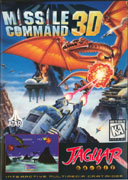
Missile Command 3D is an Action game, developed by Atari Games (Midway) and published by Atari, which was released in Europe in 1995.
Rating: Not rated yet Times Played: 2242 Released: 1995 |
|
Personal Best: N/A
|

|
Mobile Fighter: G Gundam (AKA Kidou Butoden G-Gundam) is a 2D Fighting game, developed by Pandora Box and published by Bandai, which was released in Japan in 1994.
Times Played: 3147 Released: 1994
Series: gundam
|
|
Personal Best: N/A
|

|
Mobile Suit Gundam: EX Revue is an Action game, developed by Allumer and published by Banpresto, which was released in Japan in 1995.
Times Played: 2951 Released: 1995
Series: gundam
|
giga cufflings
121,800
|
Personal Best: N/A
|

|
shootemup made in 1995
Times Played: 3156 Released: 1995
Series: gundam
|
SMASH
2,059,900
|
Personal Best: N/A
|

|
Mobile Suit Gundam Wing: Endless Duel (AKA Shin Kidō Senki Gundam Wing: Endless Duel ), is a head-to-head fighting game released exclusively in Japan in 1996.
In single player mode, the player fights a series of battles dependent on which Gundam they chose, although ultimately all Gundams but the chosen one will be fought against. When the player normally fights Wing Zero, if piloting the Wing Zero, the player will fight a more challenging Wing Gundam piloted by Trowa Barton (a cheat sometimes called Heavyarms 88). After fighting Wing Zero, the player will fight against Epyon. When using the Tallgeese, which is piloted by Zechs Merquise, who pilots the Epyon (under a different alias), Epyon is then piloted by Heero Yuy.
Times Played: 4060 Released: 1996
Series: gundam
|
|
Personal Best: N/A
|

|
Mobile Suit Gundam: Cross Dimension 0079 is a StrategyRPG, published by Bandai, which was released in Japan in 1995.
Cross Dimension is a Strategy RPG similar to Front Mission for the SNES. It takes place in the Universal Century gundam universe during the "One Year War".
Rating: Not rated yet Times Played: 2356 Released: 1995 |
|
Personal Best: N/A
|

|
Mobile Suit V-Gundam (AKA Kidou Senshi V-Gundam), is an Action game, developed by TOSE and published by Bandai, which was released in Japan in 1994.
The game recounts the events of the show, from Uso's first battle on Earth to the destruction of the Angel Halo. The story is told in occasionally animated cutscenes between combat. In battle Uso pilots the Victory Gundam and, later in the game, the V2 Gundam. The gundam is equipped with either three rifles, a beam saber, and a head mounted vulcan gun, or, in some space levels, with a chargeable beam rifle, a vulcan cannon, and the same 3 rifles. The goal of each encounter is to destroy any enemy MS that appear onscreen.
Rating: Not rated yet Times Played: 2396 Released: 1994 |
|
Personal Best: N/A
|

|
Momotarou Collection is a Miscellaneous game, published by Hudson, which was released in Japan in 1996.
Rating: Not rated yet Times Played: 720 Released: 1996 |
|
Personal Best: N/A
|

|
Momotarou Collection 2 is a Miscellaneous game, published by Hudson, which was released in Japan in 1996.
Rating: Not rated yet Times Played: 908 Released: 1996 |
|
Personal Best: N/A
|
All times are GMT -5. The time now is 08:31 AM.
|



